-
Memory Culture, Guilt and Germany’s Palestine Problem
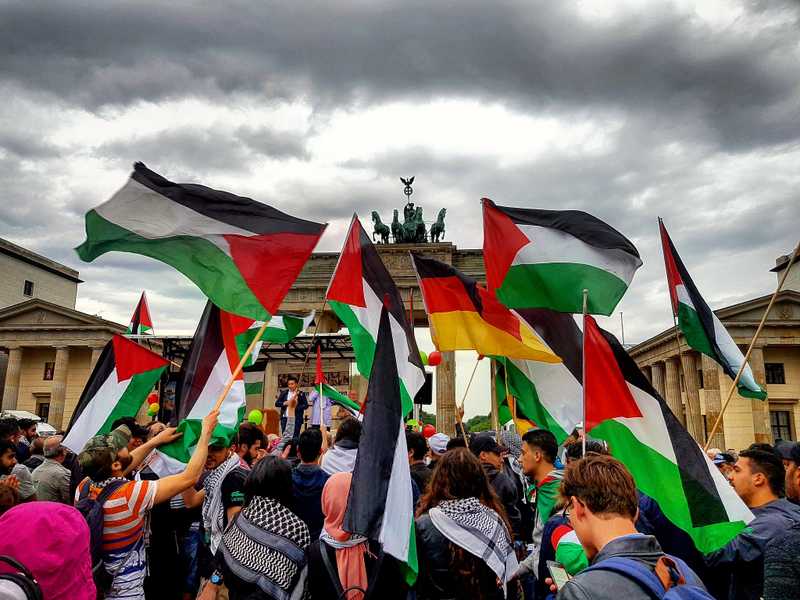
For centre-left liberals and EU advocates Germany has, in the twenty-first century, been viewed as a moral standard. Whether this was ever really the case or not is beside the point. Because whatever those of us on the left may think of Germany’s neo-liberal governance, we can probably agree liberal media like the Guardian have often fawned over it as a serious and stable global leader. Four months into 2024 we see a very different picture: its economy remains in recession, it is facing critical labour shortages, farmer protests shut down Berlin in December and, despite recent slip in the polls, the AfD, Germany’s main far-right party are looking to make significant ground in the upcoming election. But is its response to Israel’s onslaught in Gaza, crackdown on public expressions of support for Palestine and its unwavering support for the genocidal actions, which has made the country stand out. This has led to calls by Strike Germany, supported by more than 500 workers, for cultural workers to boycott German institutions, calling for an end to McCarthyite policies on freedom of expression.
For those unaware of Strike Germany and its aims, or those unaware of the German position on Israel more broadly, you might be wondering how different could things really be in Germany than, say Britain, where I live? But even by British standards, the German states support for Israel is near incomprehensible given the events of the last 6 months. Germany are Israel’s second biggest arms supplier behind the US, increasing their sales tenfold between 2022 and 2023. In January they rushed to announce their intention to intervene in South Africa’s case against Israel. More recently, on 1st March Nicaragua brought their case against Germany for contributing to the commission of genocide to the ICJ.
Where British MPs attempt to limit freedom of expression and shut down protests, and consistently enjoy smearing pro-Palestine protesters, particularly Muslim demonstrators as taking part in ‘hate marches’, in Germany the McCarthyite steps have come comparatively thick and fast. Many pro-Palestine marches have been banned, especially in the capital due to apparent fears of antisemitism, despite reports suggesting that over 90% of antisemitic hate crimes in Germany are committed by those with links to the far right. The phrase “From the river to the sea” is now a criminal offense, and those protests that have been allowed to go ahead have been heavily policed and criticised by the state, with hundreds reportedly having been arrested since October 7. Jewish anti-Zionists in Germany have reported feeling considerable pressure on their freedom of expression, as they too have been victims of arrests, or accusations of antisemitism. Research by Emily Dische-Becker has suggested that, absurdly, almost a third of those ‘cancelled’ by state-funded German institutions for alleged antisemitism have been Jewish.
Even before October 7, the German government have criminalised pro-Palestine speech. When it comes to limiting the impact of the BDS campaign, the government were way ahead of the curve, passing an anti-BDS resolution in 2020, to the dismay of 32 prominent cultural institutions and over 1000 artists and academics. In June of last year police arrested 12 demonstrators at a Nakba commemoration organised by Jewish Voice for a Just Peace in the Middle East. Germany prides itself on their ability to confront and commemorate the horrors of the Holocaust, but why does this right of commemoration, or freedom of expression not extend as far as the Palestinian cause?
In popular culture and social spaces, Germany also appears exceptional. In many popular spaces of culture in other countries, even Britain despite its normally tepid and mild-mannered nature, support for Palestine is high, and not unexpected. But in Germany, spaces which have typically been progressive, at least to varying degrees, have taken on the state’s McCarthyite policy of suppression of pro-Palestinian discourse. HÖR Berlin, ran by two Israelis who served in the IDF, removed two streams of DJs wearing clothing expressing support for Palestine, leading to many DJs choosing to remove their sets from the platforms YouTube page. World-famous nightclub, Berghain, has also been accused of cancelling the event of Arabian Panther for their support of Palestine. Blitz Munich recently cancelled a line up which hosted globally recognised DJ’s including Blawan, JASSS and LCY because of alleged antisemitism through pro-Palestine social media posts calling for the dissolution of the apartheid state and return of Palestinian land.
In academic circles too, the suppression of dissenting voices on the ‘conflict’ has been felt. The Guardian were quick to pick up on the irony of Masha Gessen initially not being awarded the Hannah Arendt prize for their writing on Gaza, pointing out that the rules on what academics can say about Israel would mean even Arendt herself, highly critical of the Israeli state, wouldn’t be eligible for the prize. In a bizarre turn of events, where a joint Palestinian-Israeli documentary on the plight of displaced Palestinians in the West Bank won a prize at the Berlinale, after controversy over her obvious applause, the Minister for Culture declared she was only applauding the Israeli director. It’s clear that in many instances, even independent social and cultural spaces are towing the line on Israel, and support for the Zionist ideology is apparently embedded in German society. This is the German Left’s Palestine problem.
So, what has led to Germany, a country once seen as the liberal sensible state, to its position today? How can the country which has an enormous Muslim population, and indeed substantive Palestinian population, and has accepted more refugees than any other in Europe, now seem hell bent on alienating these people, as well as progressives and anti-colonialists more generally, through its unquestioning solidarity with Israel?
It’s obvious that the horrors of the Holocaust being central to Germany’s recent history has led to their unreserved support for Israel. In the past, they have been praised for confronting the violence of their history, where others have failed, not least the US genocide against the Native Americans, the violence of the British Empire or indeed the savage treatment of the Congolese by Belgium, now home to the neo-liberal utopia/hell-scape of the EU. The German states official approach to coming to terms with the past is one of ‘Erinnerungskultur’ or a culture of remembrance. This means, in short, a society which properly confronts and interacts with its own history, hence the many monuments and memorial sites, robust education policies and frank educational experiences for German students and tourists alike. All sounds positive in this instance.
However, the celebrated culture of remembrance has come under scrutiny. First, within German cultural memory, the Holocaust is incomparable to any other historic tragedy. It is removed from politics, removed from history. Callinicos has rightly argued that “the point of Holocaust commemoration is surely not only to acknowledge the suffering of the victims but also to help sustain a political consciousness that is on guard against any signs of the repetition of Nazi crimes.” But Germans have keenly treated the holocaust as a singular event in history. This does not grapple with the conditions which lay the foundations for the emergence of fascism, conditions which are continually present today: racial capitalism, social inequalities and cultures of fear and othering. We cannot remove events in history from their context. We cannot treat them as singular. Otherwise we are doomed to create an ahistorical approach to history, something reactionary and fascist forces capitalise on.
Despite Germany’s supposed remembrance culture, it continues to limit the boundaries of this to the Holocaust and to Europe, in relating itself to its own notions of genocide as well as antisemitism and Judaism – ‘how dare anyone try to tell us about antisemitism – we invented it!’ In focusing on Europe alone, memory culture implicitly suppresses dissenting and marginalised voices on histories of genocide and violence. This suppression has in cases become explicit, such as that of Achille Mbembe whose Ruhrtriennale address was cancelled due to his comments on Palestinian oppression.
In fact, the comparisons made to Britain’s inability to repair the harm done by its empire only serves to highlight the German states inability to contend with its own colonial past – indeed any ability to look beyond Europe’s boundaries. That is why Namibia have invoked the genocide of their people at the hands of the Germans between 1904 and 1907 at the ICJ, highlighting that the country had yet to full atone for this “forgotten genocide”. And it is this inability to confront imperialism that has brought in Germany, as in Britain, the Netherlands and France, a continued orientalist logic about the middle east. A logic where in brown peoples are considered savage, uncivilised, ‘the enemy’. So within German memory culture, when these factors of orientalism, colonial amnesia and the heavy guilt and shame about the Holocaust on German soil, coalesce it creates a unique situation on the Palestinian genocide in the German psyche.
This connects to what has become one of the most toxic by-products of the culture of remembrance in Germany, which is its unwavering support for Israel. Those on all sides of mainstream politics have, for some I’m sure in good faith, tried to apparently atone for their past, and highlight, for all the world to see, their solidarity with the Jewish people. In the political sphere this has been conflated with supporting Israel and Zionism at any cost and refuting any attempts to connect any actions of the Israeli government to anything remotely similar to the holocaust – say, speaking in the language of genocide. And this is in the form of not only rhetoric which has long contended that Israeli security is the German states raison d’etre, but cash, arms and bureaucratic strength in the EU. However, by supporting the Israeli states genocidal intentions in Gaza, remembrance culture is evoked as nothing but an empty propaganda tool. It is used to shed the states continued guilt onto Palestinian people, to recreate antisemitism as an Arab problem, to not have to actively contend with the European antisemitism which laid the foundations for the horrors of the holocaust.
This politicised idea of remembrance implies that anyone, Jewish anti-Zionists included, cannot stand against the Zionist state, or acknowledge the complexity of Jewish culture and history before Zionism, or before the Holocaust. In doing so they perpetuate both antisemitism onto these Jewish anti-Zionists by homogenising all Jewish interests, and racism onto Palestinians and Arabs, by exporting their own guilt and shame, creating orientalist conceptions of the anti-Semitic, radical and dangerous Palestinian.
For the mantra of never again to be anything more than an empty propaganda slogan, showing “just how much” the Germans have changed, it must be politically active. It must be tangible. It must be about more than coming to terms with the past, but about using the lessons of the past to grapple with contemporary problems. It must mean never again, anywhere, to anyone.
For more information on Strike Germany, visit their website at: https://strikegermany.org/
For more information on the Boycott, Divest and Sanctions movement visit: https://bdsmovement.net/
-
Remembering Sinead O’Connor
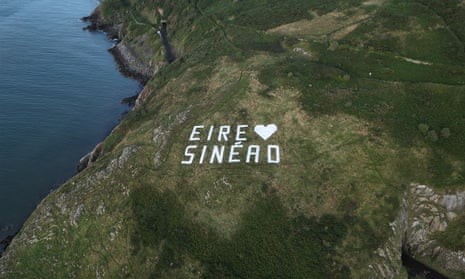
It has been a little over two weeks since news broke around the world of the passing of ground-breaking musician and political and social rebel, Shuhada’ Sadaqat, better known by her former name Sinead O’Connor, on 26 July at the age of 56. This will be a rare moment where many across the world, and perhaps all those in Ireland will have stopped in their tracks at the news of her death, and will have felt a collective grief on seeing her funeral on the news. With her funeral being just two days ago, much of this grief is still public, but the major flurry of news reports and opinion pieces have died down, giving time for a truer reflection on the artists life and her relationship with fame.
The artist became most well known with her chart-topping cover of Prince’s Nothing Compares 2 U – though from the reporting of many newspapers you couldn’t be blamed for thinking this was her only musical endeavour. As well as her pop stardom, her rebellious spirit has been remembered by the media in recent days, as have the singer’s well-documented mental health problems.
But, as a fellow Irish woman, I want instead to look at O’Connor in the tradition of protest songs, rich and significant to Irish culture. The Guardian’s reporting of O’Connor presents her as a dynamic, talented yet contradictory figure in music. While perhaps a fair analysis of a highly complex character, the article makes many insufficient, and sometimes outright disrespectful comments about the singer. One thing the author notes is that “she lacked the determination needed to keep a top-flight pop career aloft”. But O’Connor was a protest singer, and she didn’t throw away any sort of career she wanted, but the career the industry wanted for her. And there seems a lack of recognition in mainstream media circles of the strength of determination this would take.
Because not to view the defiance and bravery of the artist as just that, would be a vast underestimation of the forces which she was up against: the forces of state, religion and media. When O’Connor took on the Catholic Church in 1992 it shocked the world. The simple act of tearing up an image of the pope on television made the Catholic population of America shudder. In succession to this came a vicious backlash from the American public at a show at Madison Square Gardens, as well as an amusingly ironic criticism from the queen of pop herself, the ever so pious and Catholic, Madonna. In the immediacy of this incident on SNL and at the Bob Dylan Anniversary show, there seemed more horror at Sinead’s declaration of the Church as an enemy than what she was fighting against, the systemic sexual and physical abuse of children in the church. In the end, as would happen on more than one occasion, O’Connor was proved to be on the right side of history.
And no matter how well documented this moment is, how many references there have been to it in British and American media over these past 2 weeks, or how many times the clip is played over, what there appears to be is a lack of appreciation in British and American media circles of what this moment meant in Ireland. Ireland, who fought her way out of over 800 years of British rule, to slip straight into the iron grip of the church. This was a country where, not only was abortion and gay marriage illegal, but divorce and even contraception until 1980. But the singer risked it all to speak truth to power. Not just pop stardom and money, but the image of herself in her home country, where catholicism was intertwined with nationhood.
So maybe only the Irish will be able to truly understand how consistently brave and uncompromising she was, because certainly many obituaries from international outlets don’t seem to fully explore this with some being lacklustre at best and outright disrespectful at worst. If they recognise her as a protest singer, they fail to see what this truly meant in an Irish context. The history of protest song in Ireland is fierce, and Sinead was a rebel in the truest sense. In her early career she may not have been viewed as part of the Irish folk tradition – not all of her songs would span Irish history, and she would choose to leave Ireland for mainstream success, which as a woman at that time felt like an inevitability. But she used her voice in the most radical way she could, tackling the most significant issues of the time, constantly taking on the patriarchy in Ireland, as well as racism and poverty across the UK and Ireland, perhaps most famously on the haunting ‘Black Boys on Mopeds’.
But the love and pride she had for her country and its history would be known in her music too – and especially in the hip-hop inspired track ‘Famine’ which would trace intergenerational trauma and social issues to the Irish famine. And despite the death threats she would endure in Ireland and beyond, no serious listener of O’Connor could misunderstand her criticism of the church or the Irish government as hostility to her nation or its people. And it was the earnesty with which she so evidently cared for the nation that established how beloved she became. For a ‘pop star’ to speak of the nation’s collective trauma and the necessity for its healing, and for this voice to reach British and American audiences, was groundbreaking. For many Irish women in particular, the traumas of the Church, and especially the Laundries, was being acknowledged. Not only this, but as is tradition in folk culture, she would take on some of the greats including Raglan Road and The Foggy Dew and make them her own, cementing her legacy among some of the giants of Irish trad including Luke Kelly, The Dubliners and The Chieftains.
But despite the many in her own country who loved, admired and respected her, Sinead O’Connor would become an early victim of the ferocity of the media, and later the tumultuous nature of social media. She was mocked, nearly relentlessly, for being ‘crazy’, ‘unstable’, ‘attention-seeking’ and whatever other terms could be flung at outspoken women which would stick. She was berated for her protests, how profoundly principled she was, and how she used her fame as a platform for her social and political voice. All of these elements of her character were discussed as symptoms of her mental health. For a pop star to not ‘shut up and sing’ was outrageous, and, for the suits in the industry, intolerable. As the mainstream media remember her now, they celebrate her achievements and her talent but recognise her as a jaded and unwell woman, often viewing this as the focal point of her story, a distraction from the fact that she was a musician and woman lightyears ahead of her time, politically, socially and musically.
This isn’t to say the singer did not struggle with her mental health – this was something she did not shy away from. But quite how open she was would make the mainstream recoil: for all the talk in the present day about openness with mental health, Sinead faced a barrage of abuse for just that. Popular discourse on O’Connors mental health was Victorian, discussed as if she were ‘hysterical’, with no acknowledgement of the very real impact of her lived experiences. How her cries for help, and for justice were ridiculed and dismissed throughout her long career is a testament to the fact that even the strongest, and indeed the wealthiest of women cannot escape patriarchy. Sinead’s loss is not isolated. Its a result of the very reality of her existence – the pain and the torture suffered at the hands of the Church, and the hands of the state, and the years of torment suffered under the cruel eye of the media. She wasn’t the first and she won’t be the last. They might mourn her now she’s gone, but if you aren’t going to stand up for someone in life, why do it in death? To quote Sinead herself, “it is no measure of health to be well adjusted to a profoundly sick society.”
Rest in Power Sinead. I hope you have finally found peace.
-
RS002 – FAIRPLAY 2023 REVIEW: A triumph of the independent venue
Fairplay fest is quickly becoming one of the biggest days on the calendar for the independent music scene in Manchester. Embracing a variety of independent venues in the Northern Quarter, as well as local talent, and more established names on the indie circuit, makes it one of the most refreshing music events of the year. I was lucky enough to drop by last weekend.
The festival is located across 5 venues in the Northern Quarter, and is set up in a more rough and ready format than most other festivals of the present day. We live in a time where arts funding from ACE is being slashed across the board, and where working class communities in particular are facing huge issues in terms of access to the arts, making up just 7.9% of people in the creative industries. The Government has chosen to slash funding to arts courses by 50%. In the midst of this attack against the cultural sector, the festival’s choice of venues and its independent setup in many ways feels like a political statement. A statement against the commercialisation of music and the arts and against giant entertainment conglomerates like Live Nation.
In usual fashion, I was running late and feeling a little worse for wear after a healthy dose of madness at The White Hotel the night before. This meant I was disappointed to miss most of the first round of acts kicking off the festival in various locations around the Northern Quarter. But, once I’d had my first pint (hair of the dog perhaps wasn’t the best choice), I was ready to go. It was straight over to the Peer Hat, where I caught the last ten minutes of the fabulous Doss. Their closing track, a raucous diss track of DF Concerts and King Tut’s Wah Wah Hut, sent the crowd as crazy as I’ve seen any crowd at 3 in the afternoon. The track firmly cemented them as Scotland’s answer to Sleaford Mods – as funny, as socially aware, but with better accents.
I was particularly excited to catch Bikini Body and they certainly didn’t disappoint. One for fans of Panic Shack or Dry Cleaning, they are part of this new wave of female led punk and post-punk which feels like a British-based, second generation Riot Grrrl movement. The group haD the Peer Hat rocking in no time, with their high intensity set complete with jangling guitars and comical lyrical quips.
However, with otherwise limited plans on how I was going to spend my day – running on too little sleep and a bag of crisps, I found myself spending parts of the day wandering between venues checking out various acts with no concrete plans. And honestly, doing this is really where the magic happens. It’s what festivals like this are all about, encouraging discovery and finding new artists. I’d endeavour anyone lucky enough to have such events on their doorsteps to go to an artist they haven’t heard before. To look beyond the headliners, and see what you find.
For me, I found myself wandering into the Castle Hotel early in the day and seeing YAANG – a local band I hadn’t heard before and had no intention of seeing. But they stole the show for me. The electronic production, pop feel, punk lyrics and truly rock and roll guitar and bass, made them the most exciting act of the day for me. They were chaotic and camp and did not allow the binaries of genre stifle their creativity. A definite highlight.
Indeed, it was simply through dandering into Night and Day Cafe that I also came across Piglet – an artist from Belfast I’m ashamed to say I had yet to listen to. But, coming from some rather high energy sets to step into the queer, sad boy energy was a well needed reset. And, perhaps fueled by a bit too much alcohol, and a lack of sleep, the emotion at times got the better of me throughout such a mellifluous set. Being from Belfast, to hear a fellow Belfast native connect so much with their queerness on an artistic level was a truly liberating and deeply personal experience.
As the end of the night came round, I prepared myself for the big one, SCALPING. Knowing already how perfect SOUP’s soundsystem is for a set like this, I was buzzing. And the performance was overwhelming: blistering drums and bass, heady guitars and acidic synths. It was the perfect union of band and venue. And it reminded me why electronic music is my favourite music style. Its versatility and diversity is unparalleled. Watching SCALPING, I couldn’t help but think of what SOPHIE once said about what the purpose of music was for her – which was to push limits and take things as far as possible. And electronic production can do this quite like nothing else. The Bristol group closing of SOUP was monumental, the perfect choice, and an excellent end to this part of the night.
Some of the other excellent acts I caught across the day were Suep, whose indie-pop bangers were never going to disappoint, Me, Charles, a raw and captivating display of emotional vulnerability, and Silkback Armour, a totally new and welcome surprise for me – and many more excellent acts were missed!
The night rounded up with Keg in Night and Day Cafe, who’s energy, passion (and excellent fashion in the form of matching fedoras), was almost enough to make me stay into the wee hours. Rounding out the night in Night and Day Cafe felt rather full circle. It grounded the festival in what it was really all about. And it felt like a true show of solidarity from every person at the event for one of the most iconic venues in Manchester. A venue that’s been there since before the Northern Quarter was the ‘hipster haven’ it is today, since it was surrounded by empty buildings and seedy adult stores. And a venue which is now fighting for its survival against a council Noise Abatement Notice. The day felt like a massive ‘fuck you’ to the landlords causing its potential closure.
However, the aforementioned hangover had begun to creep in, and a swift exit was made before the end of the set. Despite my early exit, the takeaways from Fairplay fest were huge. Allowing a day to recentre the independent venue, to give it new life felt like a radical choice for modern day music promotion. It’s after events like this that I take time to consider how lucky I am to live in a city with such a rich and vibrant underground culture. Coming from Belfast, a city where arts and culture has taken a hit like in no other city, I feel fortunate to now be in a city where cultural heritage is able to be celebrated and supported.
And some departing advice. Go to bands you’ve never heard of, go to the small venue with the cheap booze, show up for the support act, invite your mates, invite your ma. These venues and these musicians are the lifeblood of the music industry.
-
Introducing Red Scare
A Manchester-based blog exploring grassroots culture and music and following leftist, anti-imperial politics.
-
Subscribe
Subscribed
Already have a WordPress.com account? Log in now.
 RED SCARE